About TUT Machinery
Roll Forming Machine Manufacturer in Wuxi, China
TUT Machinery designs and builds cold roll forming lines for roof and wall panels, purlins, floor deck, drywall profiles, solar strut and cable tray sections. Engineering, roller machining, assembly and the test run all happen in one workshop in Wuxi — so the line leaves here already making your profile.
- Manufacturing since 2012
- Countries supplied 80+
- Profile families 14
- Sheet thickness 0.45–5.0 mm
Company profile
One Team From Profile Drawing to Commissioned Line
Most buyers meet three or four suppliers before a line is ordered: a trading office, a tooling shop, an automation house and an installer. We keep those four under one roof in Wuxi, which is why answers about a profile come from the people who cut the rollers.
Wuxi TUT Machinery Co., Ltd. has been building cold roll forming lines since 2012, and the engineering team behind them brings more than 30 years of experience in roll forming machine design and manufacturing. From a profile drawing to a commissioned production line, roll design, machine building, electrical integration and after-sales support are handled in house.
We work as a manufacturing partner rather than a catalogue seller: profile analysis, machine configuration, factory testing and on-site commissioning are all part of the same project. Machines are running in more than 80 countries — the delivery records show what each of them was ordered to produce.
- Engineering and roll design
- Your section drawing or sample is developed into a pass sequence: developed width, bend order, station count and shaft spacing are settled before a frame is laid out.
- Roller machining and heat treatment
- Rolls are turned and hardened to the profile drawing and kept on file, so a replacement set ordered years later matches the one delivered with the machine.
- Assembly, wiring and hydraulics
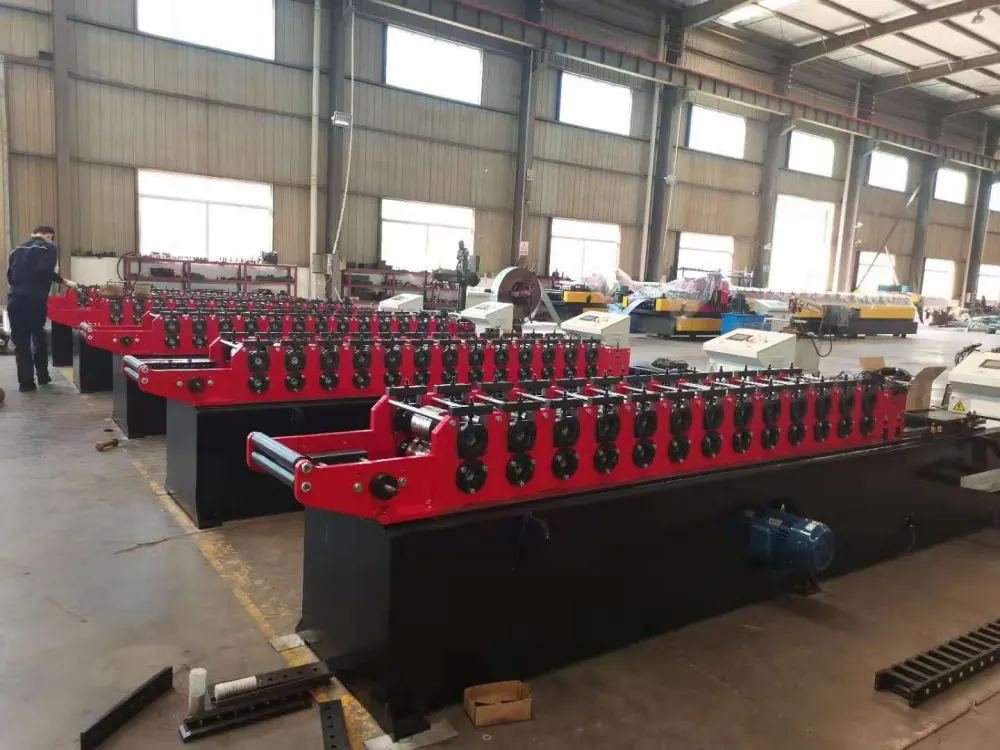
- Forming stations, drive train, hydraulic power unit and control cabinet are assembled and aligned on the same floor, then wired and tested as one line.
- Test run before dispatch
- Every line is run with the material you specify. The formed sample, the dimensional check and video of the run are sent before the machine is packed.
How a project runs
From Drawing to a Line Making Your Profile
Six stages, in this order. Nothing is cut, welded or wired before the profile drawing is approved — which is why most of the questions we ask come before the quotation, not after it.
-
01
Profile review
Send the drawing or a sample section. We check developed width, material, thickness and how the profile is fixed on site.
-
02
Line configuration
Decoiler, forming stations, punching, cutting and run-out are laid out around your output per shift and the floor space you actually have.
-
03
Drawing approval
You receive the profile drawing and the machine layout for sign-off. Rollers are cut only after the drawing is approved.
-
04
Fabrication and assembly
Frames are welded and machined flat, rollers turned, then stations are assembled and aligned on the base frame.
-
05
Factory test run
The line runs on your material. Cut length, hole position and profile dimensions are measured against the approved drawing.
-
06
Shipment, installation and training
The line is treated, packed for sea freight and commissioned on site or by video call, with operator and maintenance training included.
Inside the workshop
Where the Machine Is Actually Built
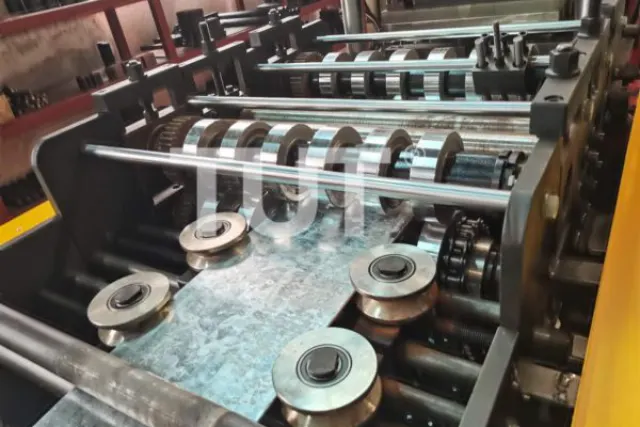
A roll forming line is only as good as the parts that never appear in the brochure: the roll set, the frame flatness and the alignment of the stations. These six operations decide all three.
Roll tooling
Roll sets turned, hardened and matched to the profile drawing, including changeover sets for a second profile.
Frame fabrication
Base frames welded, stress relieved and machined flat before the first station goes on.
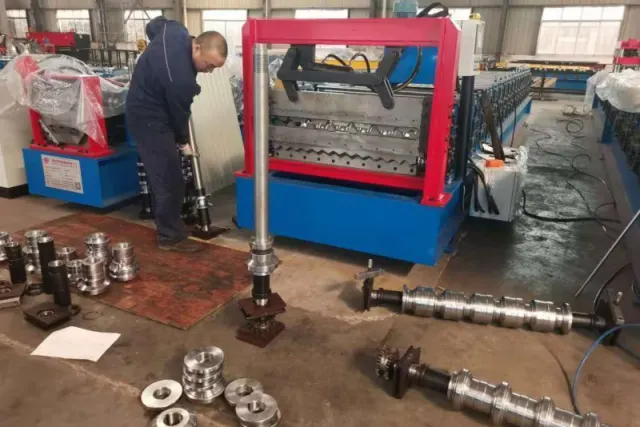
Assembly and alignment
Shafts, bearings and stations aligned on the frame, with the drive train run under load.
Electrical and control
PLC, touch screen and drive cabinet wired and tested against the line sequence.
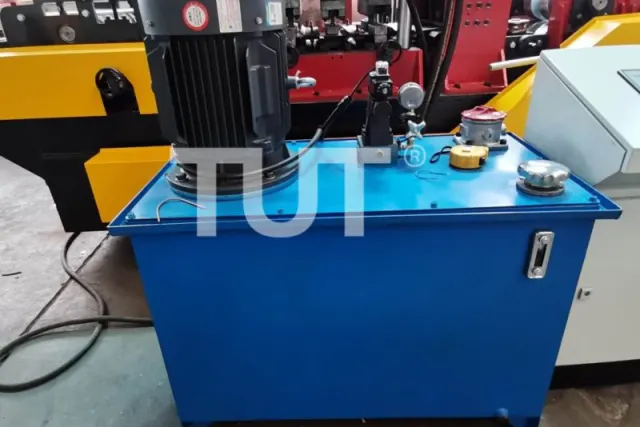
Hydraulic and pneumatic
Power units, cylinders and valve blocks assembled and pressure tested before installation.
Test run and export packing
Material run, dimensional check, protective coating and sea-worthy packing.
What we build
12 Profile Families, One Engineering Team
Each family below has its own line layout, roll set and thickness range. Open the family closest to your section to see the technical detail and the machine models.
- Roof Panel Roll Forming Machine
- Cable Tray Roll Forming Machine
- Purlin Roll Forming Machine
- C Purlin Roll Forming Machine
- CZ Purlin Roll Forming Machine
- Deck Floor Roll Forming Machine
- Door Frame Roll Forming Machine
- Drywall Stud and Track Roll Forming Machine
- Gutter Roll Forming Machine
- Laser Welding Tube Roll Forming Machine
- Solar Strut Channel Roll Forming Machine
- Customized Roll Forming Machine
Who we build for
Five Industries, Each With Its Own Profile Logic
A cladding producer, a solar mounting supplier and a cable tray fabricator all buy roll forming lines, and none of them needs the same machine. Start from your own industry.
Export and support
Machines in 80+ Countries, Answered by the Same Engineers
A line built in Wuxi has to work in a plant we may never visit twice. That is why commissioning, training and spare parts are planned at quotation stage rather than after delivery.
Regions we supply
- North America
- Central & South America
- Russia and CIS
- Southeast Asia
- Australia
- Other export markets
Support throughout the project
-
Configuration advice before the order Profile review, capacity check and option list before you commit to a line.
-
Installation and commissioning Layout, foundation and alignment guidance on site or by video call.
-
Operator and maintenance training Training for the people who will run the line and keep it running.
-
Spare parts and technical support Rolls, blades, punches and wear parts kept available after delivery.
Customers
Selected Customers
A selection of the organisations we have supplied since 2012 — including shipbuilding, nuclear power, steel building and cladding contractors.






Why buyers work with us
Six Things You Can Check Before You Order
Every point below can be verified during a supplier visit or a test run — which is the only kind of claim worth putting on a company page.
Built to your drawing
No catalogue-only models. If the section exists on paper or as a sample, a roll set can be made for it.
One scope of supply
Decoiler to stacker, including punching, cutting and run-out — one supplier, one point of responsibility.
Thin sheet to heavy gauge
Drywall stud at 0.45 mm and purlin steel up to 5.0 mm are different lines, built by the same engineering team.
Sized around your output
Line speed, cut length and automation follow the metres per shift you need to sell, not a standard spec sheet.
Test run before shipment
You see the profile formed and measured on your own material before the machine leaves the workshop.
Support after delivery
Spare rolls, blades and technical answers come from the team that designed and built the line.
FAQ
Questions About the Company
Short answers to what buyers ask before a factory visit or a first order. Anything not covered here can be asked directly.
Where is TUT Machinery located?
Our workshop is in Wuxi, Jiangsu, China, about an hour from Shanghai. Every machine is designed, assembled and test run there before it is packed for shipment.
How long has the company been building roll forming machines?
TUT Machinery has been building roll forming lines in Wuxi since 2012. The founder and chief engineer brought 25 years of hands-on cold roll forming experience into the company — roll design, tooling, assembly and site commissioning — and still leads the engineering team.
Can you build a machine for a profile that is not in your catalogue?
Yes — most projects start that way. Send the section drawing or a sample, the material and the thickness range. We come back with the roll set, the station count, the line configuration and a drawing for approval before any tooling is cut.
Which countries do you export to?
Machines have been supplied to more than 80 countries, including North America, Central and South America, Russia, Australia and Southeast Asia. Export packing, loading and shipping documents are handled from the factory.
What is the usual delivery time?
A standard line is normally quoted at 45–90 days, depending on the number of forming stations, the tooling scope and whether in-line punching or stacking is included. A new profile drawing is usually what sets the schedule, since the rollers are made for that section.
Do you provide installation and operator training?
Yes. Installation and commissioning are supported on site or by video call, and the operators and maintenance staff are trained on the actual line. Spare parts and technical support continue after the 12-month warranty period.
Next step
Send the profile you want to produce
A section drawing or a sample photo, the material and thickness range, and the output you need per shift is enough to start. You will get a line configuration, the tooling scope and a delivery schedule — usually within one working day.
Prefer to see the work first? Read the delivered projects.