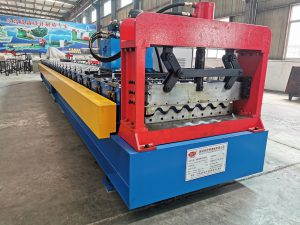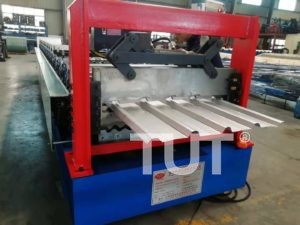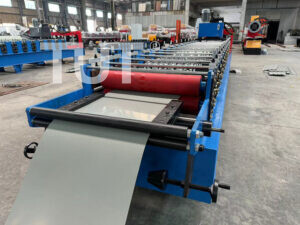
Color Steel Roof Sheet Roll Forming Machine
Color steel roof sheet roll forming machine is designed with 3 groups of hydraulic punch stations, the whole roof sheet roll forming machine is…
View DetailsRoll forming lines
Lines for corrugated, trapezoidal and standing seam roof and wall panels — single layer or double layer, running 0.5–0.8 mm prepainted steel, aluminium and galvalume coil.
Color steel roof sheet roll forming machine is designed with 3 groups of hydraulic punch stations, the whole roof sheet roll forming machine is…
View DetailsCorrugated roof sheet roll forming machines for 0.5–0.8 mm coil: 18 stations, 0–15 m/min, 15 kW main motor and hydraulic cutting. Test run before…
View DetailsDouble Layer Roof Sheet Roll Forming Machine is designed to produce roofing sheets with two different dimension sizes.
View DetailsTechnical overview
The profile decides the machine. Panel width, rib height, rib pitch and the number of ribs per sheet set the coil width, the roll tooling and the shaft spacing long before the frame is drawn.
A single layer line runs one profile at 0–15 m/min. A double layer line stacks two forming trains on one base frame, so the same coil feeds either a corrugated or a trapezoidal panel and a switching device selects the active pass. For exporters selling panels into several markets, the double layer layout removes the cost of a second decoiler, a second control cabinet and the extra floor space they need.
Thin gauges are cut with a post-cut hydraulic flying shear, which keeps the trailing edge free of stop-start marks. Where the profile carries stiffening ribs or a strengthened web, an embossing station sits before the final forming passes. Roof lines are usually bought together with a purlin line for the same steel building package, and the two can share one decoiler and coil car — see building and construction applications or send the profile drawing to our engineering team.
Figures are typical for this category. Final values follow the profile drawing and material grade.
Discuss your specificationApplications
The same machine serves different industries depending on the profile, coating and output. Start from the application closest to your project.
FAQ
Answers come from real quotation discussions. If your question is not here, ask it directly and an engineer will answer.
A single layer line forms one profile. A double layer line carries two independent forming trains on one base frame and switches between them at the entry, so corrugated and trapezoidal panels come off one decoiler, one hydraulic station and one control cabinet. The double layer build costs more up front but replaces two separate lines and the operators they need.
Standard builds are set for 1000, 1200 or 1250 mm coil. The decoiler mandrel is sized at order and cannot be extended later, so confirm the coil width you will buy before the line is released to production.
A single layer line is installed and commissioned in 7–10 days with one technician. Double layer lines take 12–18 days. Foundation drawings, wiring diagrams and a commissioning checklist are issued with the shipment so the base can be poured while the machine is in transit.
Yes. Rollers are chrome plated and the forming passes are set up for prepainted material, so galvanized or galvalume coil runs on the same tooling. Switching between them is a matter of resetting roll gaps, not changing rolls.
Next step
Send the profile drawing, material thickness and target output. You will get a line configuration, tooling scope and delivery schedule — usually within one working day.
Or compare non-standard builds on the custom roll forming page.