C Purlin Roll Forming Machine
C Purlin Roll Forming Machine
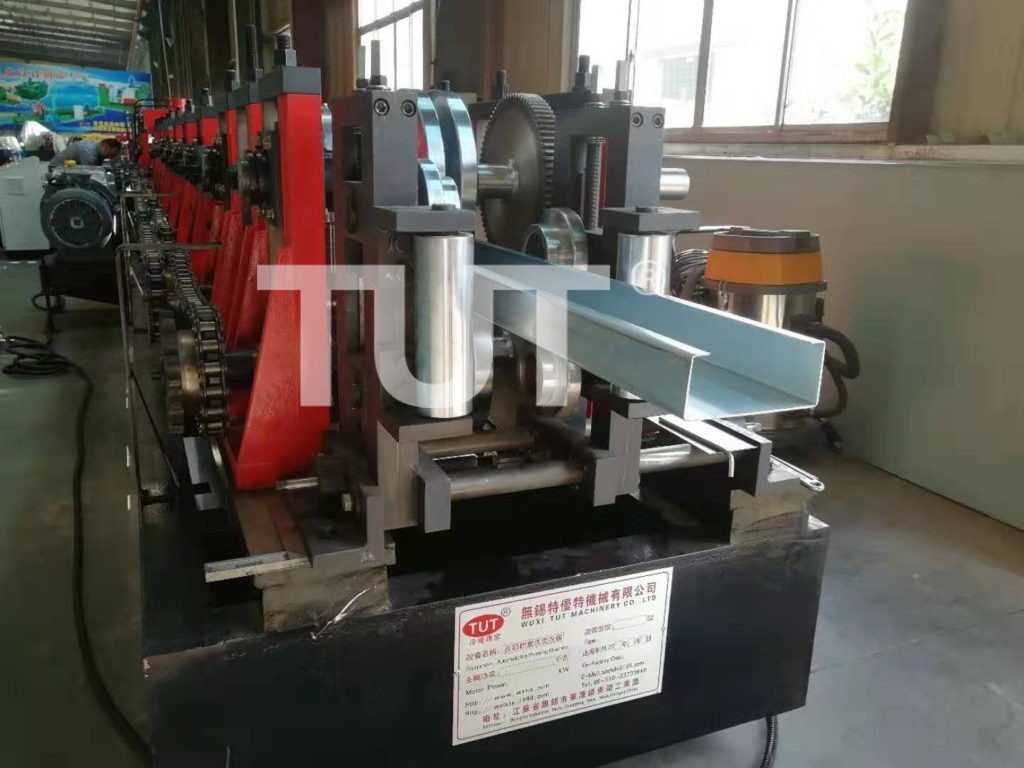
A dedicated C purlin line for 1.5–5.0 mm steel, 18–24 stations, with in-line punching and a hydraulic post-cut sized to the section. Fewer moving parts at the entry than a combined CZ line, so the strip path is straighter and the line runs faster on the same motor rating.
- Sheet thickness 1.5–5.0 mm
- Forming stations 18–24
- Forming speed 12–25 m/min
- Main motor 15 kW
Applications & material
What this machine is built to produce
The same frame serves different buyers depending on the profile and the material grade. Start from the application closest to your project, then check the section sizes below.
Where it is used
- C purlin production for single-span portal frames where Z nesting is not required.
- Roofing contractors cutting and punching purlins to the roof layout.
- Warehouse and shed builders where cost per tonne dominates the section choice.
Suitable material
- Hot-dip galvanised steel
- 1.5–5.0 mm
- Cold-rolled mild steel
- 1.5–5.0 mm
- High-strength steel (S350)
- 1.5–5.0 mm
- Prepainted steel
- 1.5–2.5 mm
Target profiles
- C purlin, web 80–350 mm, flange 40–100 mm
- C section with a stiffened web
- U channel (track) with the same roll set within range
- Any web height within the range, adjusted on the side units
Not on the list? The rolls are cut to a drawing — send yours and we will confirm feasibility.
Technical data
C Purlin Roll Forming Machine specifications
Values below are for the standard build of this model. Thickness range, station count and motor rating are re-calculated when the profile or the steel grade changes.
Send your profile drawing| Parameter | Value |
|---|---|
| Sheet thickness | 1.5–5.0 mm |
| Web height | 80–350 mm |
| Flange width | 40–100 mm |
| Forming stations | 18–24 |
| Forming speed | 12–25 m/min |
| Shaft diameter | φ80 mm, 40Cr |
| Main motor | 15 kW |
| Punching | In-line, 2 or 3 sides |
| Cutting | Hydraulic post-cut, section-shaped die |
| Control | PLC + touch screen |
Values above are typical for this frame size. Final station count, shaft diameter and motor rating follow the web height, thickness and grade in your enquiry.
Working process
From coil to finished profile
The sequence below is the standard layout for this model. Stations are added or removed when the section needs more forming passes.
- 01 Decoiling Decoiler sized to your coil weight and ID.
- 02 Feeding & leveling Entry guide with a leveler for coil set.
- 03 Hydraulic punching Flange holes for roof sheets and web holes for sleeve bolts.
- 04 Main roll forming 18–24 stations; web height adjusted on the side units.
- 05 Cut to length Hydraulic post-cut with a C-shaped die, so the section does not collapse.
- 06 Run-out Finished purlin to the bundling area.
Main components
- Main roll forming machine 18–24 stations, φ80 mm 40Cr shafts, gearing sized to the motor.
- Hydraulic punch unit Two or three-sided punching for flange and web holes.
- Hydraulic post-cut Section-shaped die, replaceable for a different web height.
- PLC control cabinet Length, hole pattern and batch on a touch screen.
- Hydraulic station Pump unit for punch and cut.
- Run-out table Roller table for long purlins.
Optional configuration
Samples & running line
Profiles from this machine, and the line in motion
Every line is sampled before shipment. Photos below are from the build of this model; the video shows the line running on production material.
Samples are supplied at the minimum and maximum web height in the thickness you nominate, with the hole positions marked on the inspection sheet.
Video on request
Ask for the latest running video
We record a fresh clip of this model before shipment. Ask for it and we will send the current video, plus a live call from the factory floor if you want to see the line under power.
Profile range
- C purlin, web 80–350 mm, flange 40–100 mm
- C section with a stiffened web
- U channel (track) with the same roll set within range
- Any web height within the range, adjusted on the side units
Engineering & service
Custom build, installation and after-sales
A roll forming line is only finished when it runs on your material at your output. These three parts of the scope are quoted together with the machine.
Custom engineering
If your order book is C only, a dedicated line is the cheaper machine to run: no switching device, no Z tooling, and a higher line speed for the same motor. If you expect to quote Z purlin within a year, compare this with the CZ line before ordering, because converting later costs more than buying the combined frame now.
- Tooling cut to your drawing or sample
- Electrics to your plant voltage and frequency
- Layout and foundation drawing before shipment
Installation & training
An engineer supervises installation and trains your operators on the actual line — not on a generic manual. Training covers coil loading, size change, tooling change and daily maintenance.
- On-site commissioning and first production run
- Operator training on your material
- Remote video support if travel is not practical
After-sales support
A 12-month warranty on the mechanical parts, with a 24-hour response on technical enquiries. Wearing parts — rollers, punch dies, hydraulic seals — are kept in stock for fast dispatch.
- 12-month mechanical warranty
- Spare rollers and dies from stock
- 24-hour response on remote support
What we need from you
Four inputs that decide 80% of the design
- 01 Profile drawing with dimensions and tolerances
- 02 Material type, thickness range and steel grade
- 03 Target output per shift or per day
- 04 Plant voltage, frequency and available floor length
FAQ
Questions buyers ask about this machine
Answers come from real quotation discussions on this model. If your question is not here, ask it in the form below and an engineer will answer it directly.
Can web height be changed without changing rolls?
Yes, normally 80–350 mm on the side units. The shaft line stays in mesh, so a height change takes about 30–60 minutes; the flange width is fixed by the roll tooling.
What is the difference between this and the CZ line?
This line only forms C sections, so it is simpler and faster. The CZ line adds a switching device and Z tooling, and can change between C and Z in about a minute — that flexibility costs line speed and money.
How much does the line weigh, and how does it ship?
Weight and container count follow the station count, the shaft size and the scope of supply, and both are confirmed on the shipping plan once the configuration is fixed. The forming bed splits into bolted sections so it can be packed and handled at the destination.
What is the thickest purlin this line can run?
Coil from 1.5 mm up to 5.0 mm on this frame, with the upper limit set by the section geometry and confirmed against your drawing at the order stage. Above that we quote a heavier frame rather than stretch this one.
Related equipment
Other machines in this range
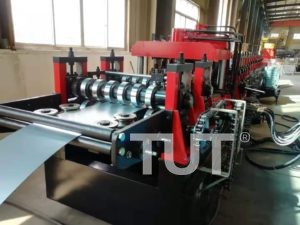
CZ Purlin Roll Forming Machine
C Z Purlin Roll Forming Machine is used to produce C Purlin and Z Purlins with very less changeover time…
View Details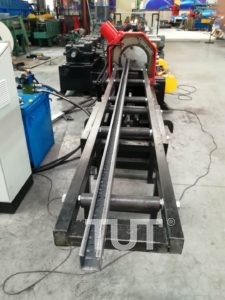
Customized Cable Tray Roll Forming Machine
Cable tray roll forming machine designed to produce trays for power plants, substations, industrial enterprises and other power users.
View Details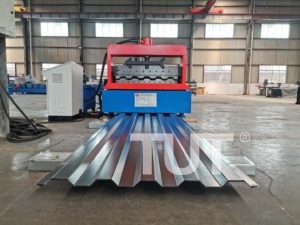
Container Roof Panel Roll Forming Machine
Container Roof Panel Roll Forming Machine is used to produce shipping container roof panels, with the thickness range from 1-2mm,…
View DetailsRequest a quotation
Tell us the profile, we will configure the line
Send the drawing, the material and the output you need. You get a line configuration, tooling scope and delivery schedule — usually within one working day.
- Reply within one working day
- Quotation itemised by machine, tooling and options
- Engineering review of your profile before pricing